
Start With a Simple Challenge That Feels Doable
Building better habits does not always require a major life overhaul. In many cases, the best way to create real progress is to start with one small challenge that feels simple enough to begin and meaningful enough to continue.
That is why a 7-day challenge can be so powerful. Seven days feels manageable. It is long enough to create momentum, but short enough that it does not feel overwhelming. Instead of committing to a huge goal for the rest of your life, you only commit to one focused action for one week.
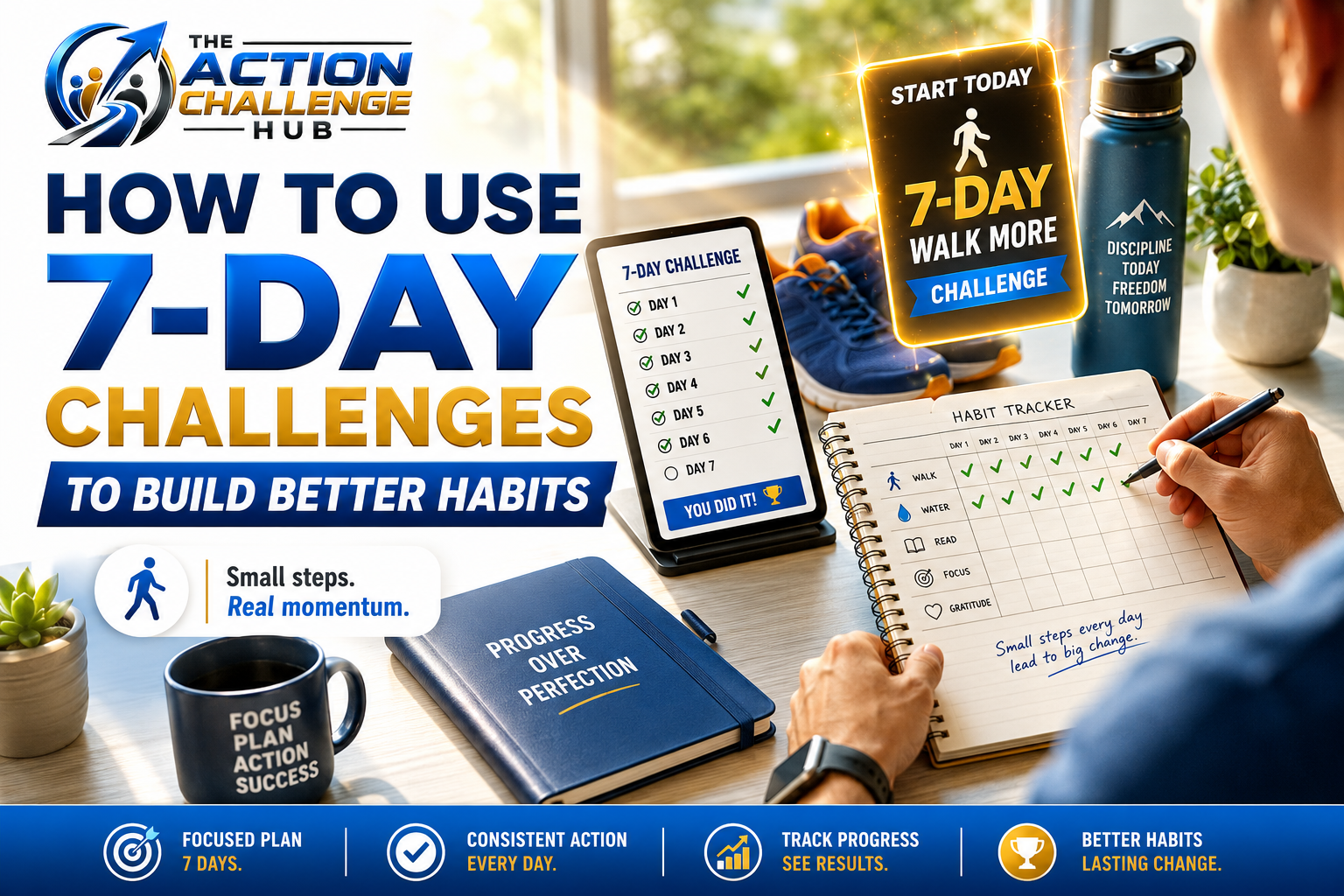
A great place to begin is with a simple challenge like The 7-Day Walk More Challenge on The Action Challenge Hub. It is a beginner-friendly example of how a short challenge can help someone take action, move their body, and build consistency without needing a complicated plan.
The goal is not perfection. The goal is movement. When you complete a small action every day for seven days, you begin proving to yourself that progress is possible.Why 7-Day Challenges Work
Many people struggle with habits because they try to change too much at once. They decide they want to get healthier, become more productive, manage money better, read more, organize their home, improve their mindset, or build a business. Those are all great goals, but they can feel too big when there is no clear starting point.
A 7-day challenge solves that problem by giving you a short, focused path.
Instead of saying, “I need to become more disciplined,” you can say, “For the next seven days, I will complete one simple action.” That action might be walking for ten minutes, clearing one small space, writing down three priorities, drinking more water, reading a few pages, praying intentionally, sending one encouraging message, or spending fifteen minutes on a business task.
This small commitment helps reduce resistance. It also gives your brain a clear win to aim for. You are not trying to become a completely different person overnight. You are simply taking one intentional step today, then repeating that step tomorrow.
Small Wins Create Stronger Momentum
The power of a 7-day challenge is found in the small wins. When you complete the first day, you feel a small sense of accomplishment. When you complete the second day, you start to feel more capable. By the third or fourth day, you may begin to see yourself differently.
That shift matters.
Better habits are not built only through willpower. They are built through identity. When you repeatedly complete small actions, you begin to believe, “I am the kind of person who follows through.” That belief can become more powerful than motivation.
Motivation comes and goes. However, momentum can carry you forward even when motivation is low. A 7-day challenge gives you a practical way to build that momentum without waiting for the perfect time, perfect mood, or perfect schedule.
Choose One Habit Area First
Before starting a 7-day challenge, it helps to choose one habit area. This keeps your focus clear and prevents you from trying to improve everything at once.
You might choose a health habit, such as walking more, stretching daily, drinking more water, or preparing healthier snacks. You might choose a productivity habit, such as planning your day, clearing your inbox, finishing one important task, or reducing distractions. You might choose a mindset habit, such as writing affirmations, practicing gratitude, journaling, or replacing negative thoughts with better ones.
You could also choose a relationship habit, such as sending a kind message, listening more intentionally, praying with your family, or checking in with someone you care about. If you are building a business, your 7-day challenge might focus on writing one social post each day, improving one product page, reaching out to one lead, or creating one small piece of content.
The key is to choose one area that matters right now. Do not choose what sounds impressive. Choose what would make your life, business, or mindset better if you practiced it consistently for one week.
Make the Daily Action Small Enough to Complete
One common mistake people make with challenges is making the daily action too big. If the action feels too difficult, it becomes easier to quit.
A good 7-day challenge should feel clear and realistic. For example, “exercise every day” may feel too broad. “Walk for ten minutes each day” is much easier to understand and complete. “Get organized” may feel overwhelming. “Clear one small drawer, shelf, or surface each day” feels doable.
The smaller the action, the easier it is to build consistency. Once the habit becomes part of your routine, you can always expand it later.
This is important because the first goal is not intensity. The first goal is repetition. Repetition builds rhythm. Rhythm builds confidence. Confidence makes it easier to keep going.
Use a Simple Tracking Method
Tracking your progress makes a 7-day challenge more effective. It gives you a visual reminder that you are moving forward.
Your tracking method does not have to be complicated. You can use a notebook, calendar, checklist, habit tracker, phone note, spreadsheet, or the challenge-tracking features available through a challenge platform. The Action Challenge Hub is designed around starting challenges, tracking progress, building streaks, and celebrating wins, which supports the exact kind of momentum habit builders need.
When you mark off each completed day, you create a small reward. That reward tells your brain, “I did it.” Over time, those small checkmarks become evidence of your follow-through.
Tracking also helps you notice patterns. If you miss a day, you can ask what happened. Were you too busy? Was the action too big? Did you forget? Did you need a reminder? Instead of judging yourself, use the information to adjust.
Prepare Before Day One
A strong challenge begins before the first day. Preparation helps remove excuses.
If your challenge is walking more, choose your walking time, lay out your shoes, and decide where you will walk. If your challenge is writing content, prepare a list of topics before the week begins. If your challenge is eating healthier, buy the foods you need in advance. If your challenge is reading, place the book where you will see it.
Preparation makes action easier.
Many people fail at habits because they rely on motivation in the moment. But when life gets busy, motivation may not show up. Preparation gives you a system to follow even when you are tired, distracted, or busy.
Before your 7-day challenge begins, ask yourself: What could get in the way? Then create a simple plan for that obstacle.
Attach the Habit to Something You Already Do
One of the easiest ways to build a new habit is to connect it to an existing routine. This is called habit stacking.
For example, after you make your morning coffee, you might write your top three priorities. After lunch, you might walk for ten minutes. After brushing your teeth at night, you might write one gratitude statement. After checking your email, you might spend five minutes organizing your workspace.
This works because your current routine becomes a reminder for the new habit.
Instead of trying to remember a brand-new action out of nowhere, you attach it to something already familiar. That makes the habit easier to repeat.
During a 7-day challenge, this can make a major difference. The easier it is to remember the action, the more likely you are to complete it.
Expect Resistance Around the Middle
The first day of a challenge often feels exciting. The second day may still feel fresh. But around day three, four, or five, resistance can show up.
This is normal.
Your brain may start saying, “This is not a big deal,” “You can skip today,” or “You are too busy.” That does not mean the challenge is failing. It means you are reaching the part where consistency matters most.
When resistance appears, return to the smallest version of the action. If you planned to walk for twenty minutes but feel tired, walk for five. If you planned to write a full page, write three sentences. If you planned to clean a room, clear one surface.
Doing a smaller version keeps the streak alive and protects the habit identity you are building.
A challenge does not have to be perfect to be successful. It just needs to keep you moving.
Celebrate Each Completed Day
Celebration is an important part of habit building. Many people rush past their wins and focus only on what still needs to be done. But when you celebrate progress, you teach yourself that action feels rewarding.
Celebration does not have to be dramatic. It can be as simple as saying, “I completed today’s step.” You can check off your tracker, share your progress, write a short reflection, or take a moment to feel proud of yourself.
This matters because positive emotion helps reinforce behavior. If you only focus on discipline, the habit can feel heavy. But when you connect the habit to progress, pride, and purpose, it becomes easier to continue.
At the end of seven days, take time to acknowledge what you completed. Even if you missed a day, celebrate the days you showed up.
Reflect After the Challenge Ends
The end of a 7-day challenge is not just a finish line. It is also a learning moment.
After completing the challenge, ask yourself a few simple questions. What worked well? What felt difficult? What time of day was easiest? What helped me stay consistent? What got in the way? Do I want to continue this habit, adjust it, or choose a new challenge?
Reflection helps turn the challenge into long-term growth.
For example, after a walking challenge, you may realize that morning walks helped your energy. After a writing challenge, you may discover that you think more clearly before checking social media. After a home organization challenge, you may notice that small daily cleaning tasks reduce stress.
The goal is to learn from the experience so your next step becomes clearer.
Turn the 7-Day Challenge Into a Longer Habit
Once you complete a 7-day challenge, you have several options. You can repeat the same challenge, increase the difficulty slightly, choose a related challenge, or turn the habit into a regular routine.
For example, if you completed a 7-day walking challenge, you might continue walking three days per week. If you completed a 7-day reading challenge, you might commit to reading ten minutes each night. If you completed a 7-day productivity challenge, you might keep using a daily priority list.
The challenge is the spark. The habit is the ongoing flame.
You do not have to keep the same level of intensity forever. Instead, find a realistic version you can continue. Long-term habits are usually built through consistency, not extremes.
Use 7-Day Challenges as a Reset Tool
Another powerful way to use 7-day challenges is as a reset. Sometimes life gets busy, routines fall apart, motivation drops, and goals become unclear. A short challenge can help you restart without shame.
Instead of saying, “I failed,” you can say, “I am beginning a new 7-day reset.”
This approach works well for wellness, productivity, faith, family, business, money, reading, creativity, and mindset. A 7-day challenge gives you a clean starting point and a short path back into action.
That is one reason challenge-based growth is so practical. It gives people a way to begin again.
Final Thoughts
Better habits are not built through one huge decision. They are built through small repeated actions that teach you to trust yourself.
A 7-day challenge is one of the best ways to begin because it is simple, focused, and realistic. It gives you a clear start, a manageable finish line, and daily opportunities to create small wins.
Start with one habit. Make the action small. Track your progress. Prepare ahead of time. Expect resistance. Celebrate each completed day. Then reflect on what you learned and decide how to continue.
Whether you begin with a challenge like The 7-Day Walk More Challenge or choose another simple action that fits your life, the most important step is to start.
Seven days may not change everything overnight. However, it can change your direction. And sometimes, that is exactly what you need to begin building better habits one small action at a time.














0 Comments