
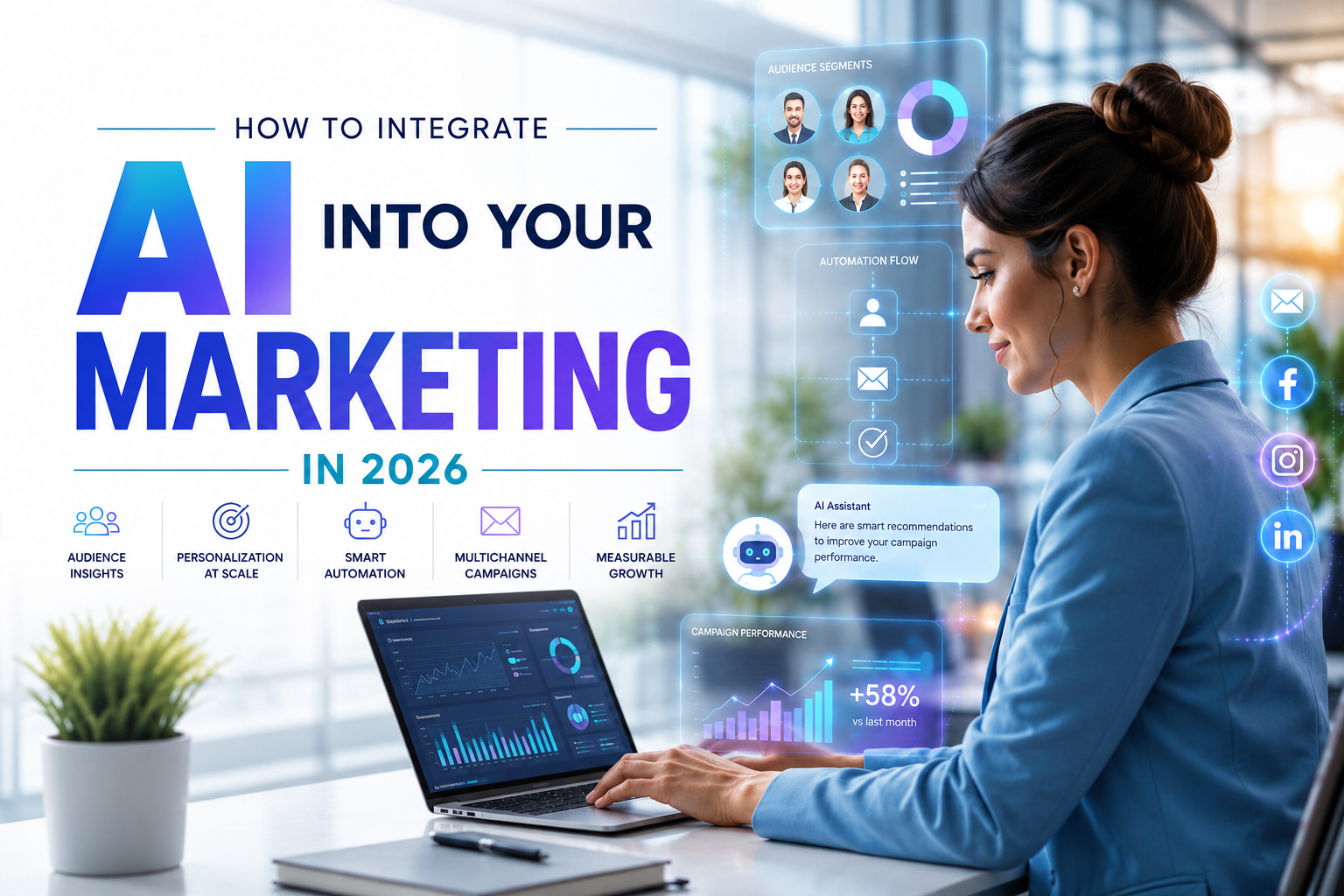
As we move further into 2026, the integration of Artificial Intelligence (AI) in marketing strategies is not just an advantage; it’s becoming a necessity for staying competitive and relevant. AI’s ability to analyze data, predict trends, personalize content, and automate tasks can revolutionize how businesses approach marketing, leading to more efficient, effective, and personalized campaigns. Here’s how you can integrate AI into your marketing strategy to harness its full potential.
1. Understand the Capabilities of AI
Before diving into integration, understand what AI can do for your marketing. AI technologies can assist in various areas, including:
- Data Analysis: AI can handle and analyze massive datasets more efficiently than humans, uncovering insights and patterns that inform decision-making.
- Predictive Analytics: It can predict future customer behaviors and market trends, allowing businesses to be proactive rather than reactive.
- Personalization: AI enables hyper-personalization of content and messages at scale, delivering tailored experiences to individual users.
- Automation: From sending out emails to posting on social media, AI can automate repetitive tasks, freeing up time for strategic thinking and creativity.
2. Set Clear Objectives
- Identify Goals: Determine what you want to achieve with AI in your marketing. This could be increasing conversions, improving customer engagement, or streamlining operations.
- Align AI with Strategy: Ensure that the use of AI is in line with your overall marketing strategy and business objectives.
3. Choose the Right Tools and Platforms
- Research Options: There are numerous AI tools and platforms available, each with different capabilities. Research and choose the ones that best fit your needs.
- Start Small: If you’re new to AI, start with a single tool or platform. Learn how it works and measure its impact before expanding your use of AI.
4. Collect and Analyze Data
- Data is Key: AI needs data to be effective. Ensure you’re collecting high-quality, relevant data from your marketing campaigns and other business operations.
- Continuous Learning: Use AI to continuously analyze this data for insights. The more data it has, the better it will perform.
5. Personalize Customer Experiences
- Segmentation: Use AI to segment your audience more precisely than ever before, based on their behaviors, preferences, and interactions with your brand.
- Tailored Content: Deliver personalized content and recommendations to each segment, or even individual users, increasing relevance and engagement.
6. Automate and Optimize Campaigns
- Automate Tasks: Use AI to automate scheduling, posting, and even content creation for various marketing campaigns.
- Optimize in Real-Time: AI can optimize campaigns in real-time, adjusting parameters for the best possible performance without human intervention.
7. Enhance Customer Service with AI
- Chatbots and Virtual Assistants: Implement AI-powered chatbots and virtual assistants to provide 24/7 customer service, answer queries, and guide users.
- Feedback and Improvement: Continuously feed customer interactions back into the AI system to improve its understanding and responses.
8. Stay Ethical and Compliant
- Privacy and Ethics: Be mindful of privacy laws and ethical considerations when using AI, especially around data collection and usage.
- Transparency: Be transparent with customers about how you’re using AI and how it benefits them.
9. Monitor Performance and Adapt
- Track Metrics: Continuously monitor how AI is affecting your marketing metrics and overall business performance.
- Adapt and Evolve: AI and digital marketing landscapes are constantly evolving. Stay updated on trends and be willing to adapt your approach.
Conclusion
Integrating AI into your marketing strategy can seem daunting, but with the right approach, it can provide significant benefits. By understanding AI’s capabilities, setting clear objectives, choosing the right tools, and continuously adapting and improving, you can leverage AI to make your marketing more effective and efficient. Remember, the goal is not just to integrate AI for the sake of it, but to use it as a tool to better understand and engage your customers, ultimately driving growth and success for your business in 2026 and beyond.









0 Comments